Answer Engine Optimization: The AEO Playbook for 2026
What is answer engine optimization? This AEO guide explains how to optimize for ChatGPT, Perplexity, and Google AI Overviews without treating them like one channel.
Search is changing. Google is not the only player now.
You see it happening already. You use ChatGPT. You use Perplexity. You do not click links the way you used to. You get answers.
This is the practical definition of answer engine optimization. It is the work of making your brand and content easier for answer engines to trust, retrieve, and cite when they compress the market into a direct response.
This is a problem for your business. If you rely on clicks alone, you will lose traffic. But I have a solution. You can optimize for these new engines.
Let me break this down.
We did the work. We reverse-engineered the citations. We analyzed the fan-out queries to understand what gets highlighted. We used LocalAEO and AnswerWatch to track the shifts.
The April research pack changed the way I think about this. AI search is not one ranking system. It is a portfolio of trust patterns. Query family changes what wins. Platform changes what gets cited. Stability tells you whether an insight is safe to scale or just surface noise.
The End of 10 Blue Links
For 20 years, you fought for rank on Google.
- Rank #1: You get clicks.
- Rank #5: You get fewer clicks.
- Page 2: You get nothing.
Now it is different. AI models do not just give a list. They compress the market into a short answer or shortlist.
Key Insight: In the AEO economy, it is winner-take-all. You are the source, or you are invisible.
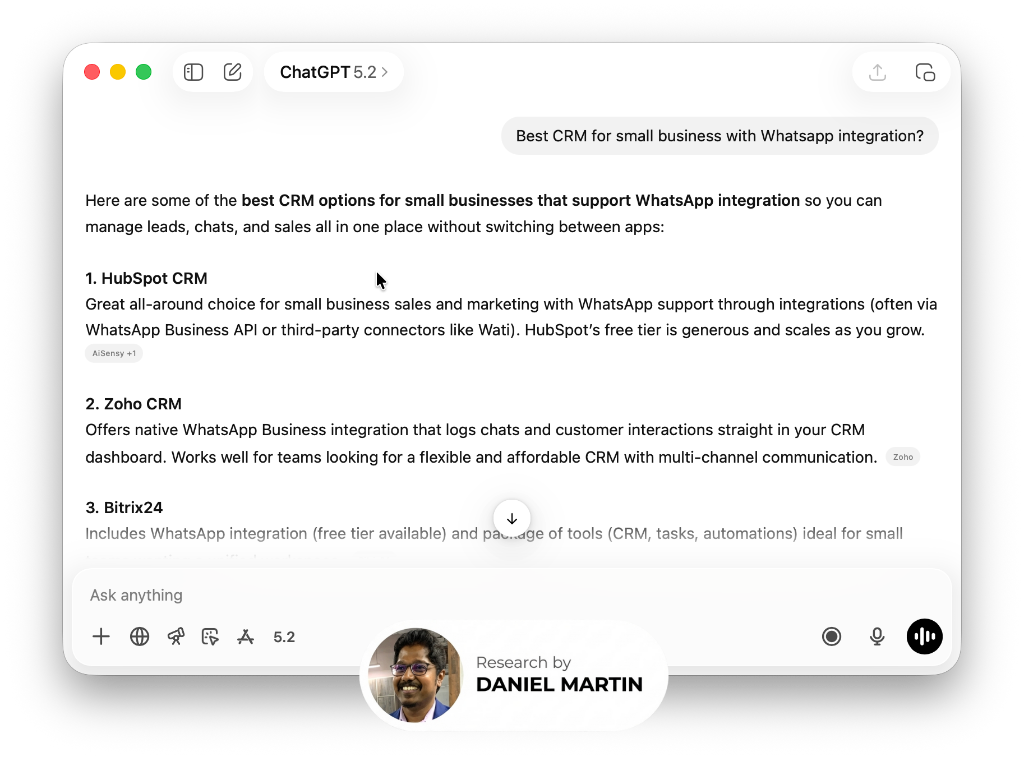
That does not mean every platform behaves the same way. In the trust diagnostics work, ChatGPT answered all 14 verified queries in the sample, but only 3 of those answers were visibly sourced. Perplexity was far more consistently source-backed. That is why answer presence is not the same as answer trust. If you want the platform-by-platform breakdown, Perplexity vs ChatGPT: Which One Is Better for Research? is the cleaner companion read.
Old SEO vs. New AEO
I compared the two strategies. Here is what I found.
You need to shift your mindset. Stop chasing clicks. Start chasing authority.
The Dual Strategy: How to Win Both
You do not have to choose. You can win both games.
I recommend a dual strategy. You optimize for Google and for answer engines at the same time. That is important because Google AI Overviews, ChatGPT, and Perplexity do not reward the exact same trust mix. You need a system that can survive across surfaces.
1. Structure is King
AI models are machines. They need structure. They cannot guess.
Do not bury everything in one long wall of text. That makes extraction harder.
Use this structure:
- Tables: For comparisons (Price, Features, Pros/Cons).
- Lists: For steps or ingredients.
- Headers: H2 for topics. H3 for sub-topics.
- Schema: JSON-LD for everything.
If you hide your pricing in a paragraph, the AI often misses it. If you put it in a table, the AI can parse it faster. That is one reason pricing and alternatives queries behave so differently in the research. They are high-ambiguity query families, so structure matters more than most teams think.
2. Be the Source
AI models want "Information Gain." They want new data.
Do not just summarize others. If you just repeat Wikipedia, the AI will just cite Wikipedia.
How to generate unique data:
- Run a Survey: Ask 100 people a question. Publish the results.
- Analyze APIs: Look at public data. Find a trend.
- Test a Tool: Run a real experiment. Share the screenshots.
I have seen this work. When you publish original data, AI cites you. It trusts you. You become the primary source.
This also matches the cross-model trust data. Only 14 domains appeared across all 3 platforms in the current overlap core. Those domains were not winning because they wrote generic SEO content. They kept showing up because they had repeated, trusted entity presence across the places models already use.
3. Build "High Definition" Authority
I analyzed the semantic density of successful brands. Here is the secret.
Resolution = Reach.
- Low Resolution Brands (Zoho): The AI only knows 50 unique words about them ("Affordable", "Custom").
- High Resolution Brands (Salesforce): The AI knows 120+ unique words about them ("Scalable", "Robust", "Integrated", "Secure").
You cannot win complex queries if you are a low-resolution entity. You need to teach the AI specific facts about your brand, not empty adjectives.
Bad Optimization
- "We are easy to use."
- "Best-in-class security."
- "Affordable pricing for everyone."
- "We help you grow revenue."
Good Optimization
- "Our platform offers zero-latency integration."
- "SOC2 Type II certified with AES-256 encryption."
- "Starter plans beginning at $29/mo for 5 users."
- "Increase average order value (AOV) by 12% in 30 days."
4. The Fluency Heuristic
I tested for cognitive bias. I found a complexity tax.
Brands that use complex jargon lose. Brands that use simple, Grade 6 language win.
The Winning Formula:
High Information Gain (Unique Data) + Low Linguistic Complexity (Simple Words) = AI Winner.
Do not try to sound smart. Be clear. Be direct.
The AI maps this connection. It locks your brand into the knowledge graph.
When a user asks about "tankless heaters," you get the citation.
The AEO Tech Stack
You cannot win AEO without tooling, but the role of tools has changed. The research now supports a stronger view here. Tracking alone is not enough. Diagnostics, verification, and trust QA matter more than a pretty dashboard.
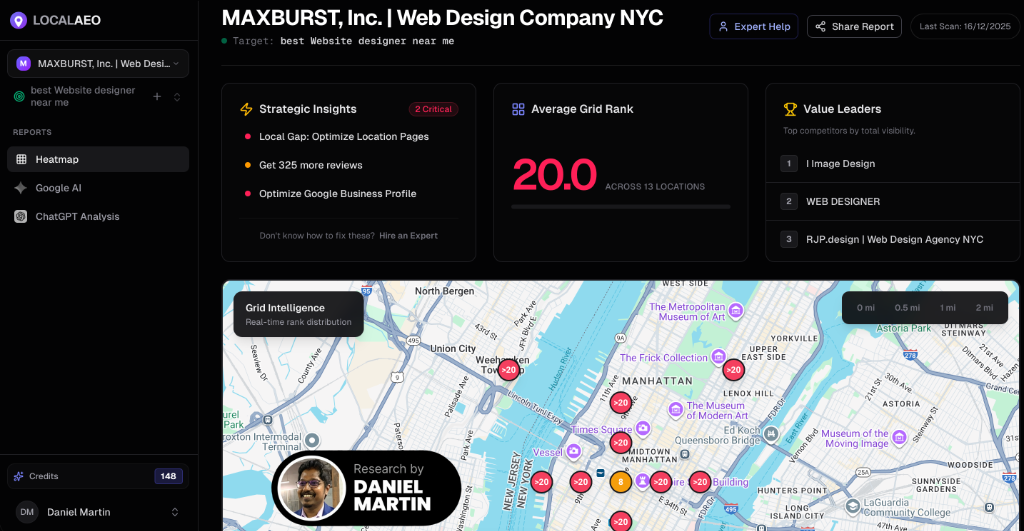
1. LocalAEO.app
This is your control center. It manages your Knowledge Graph.
AI models look for structured data. They look for consistent NAP (Name, Address, Phone) data. LocalAEO pushes your entity facts to the places AI trusts. It ensures the robot knows exactly who you are.
2. AnswerWatch.io
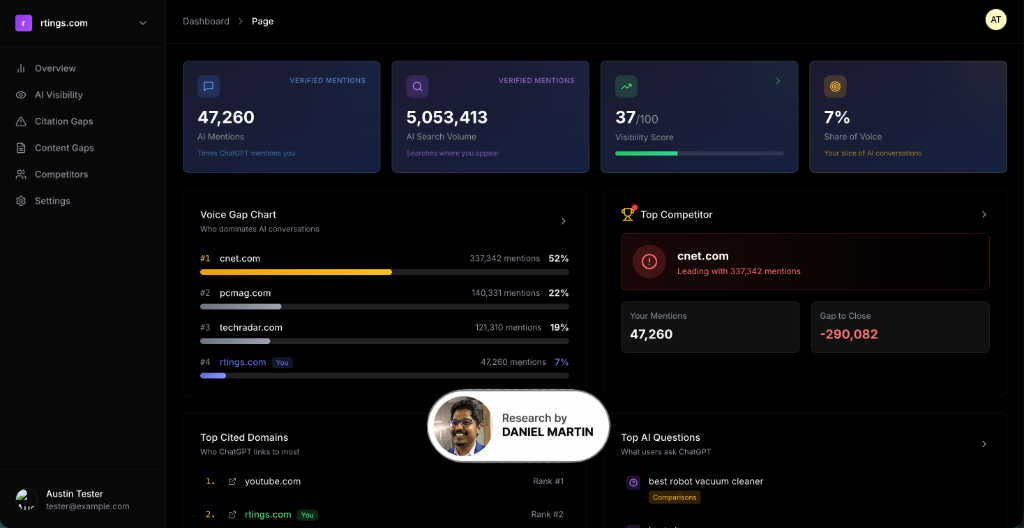
This is your radar system. It tracks Share of Voice.
You need to know when ChatGPT cites you. You need to know when Claude recommends your competitor. AnswerWatch monitors these conversations. It tells you if you are winning or losing the AI conversation. You cannot manage what you do not measure.
Steal My Schema Template
You need to speak the robot's language. That language is JSON-LD.
Most people get this wrong. They just use "Article" schema. You need "FAQPage" schema nested inside it.
Copy this code. Replace the brackets with your data. Put it in your <head>.
<script type="application/ld+json">
{
  "@context": "https://schema.org",
  "@type": "Article",
  "headline": "Your Blog Post Title",
  "author": {
    "@type": "Person",
    "name": "Your Name",
    "sameAs": [
      "https://twitter.com/yourhandle",
      "https://linkedin.com/in/yourprofile"
    ]
  },
  "publisher": {
    "@type": "Organization",
    "name": "Your Brand Name",
    "logo": {
      "@type": "ImageObject",
      "url": "https://yourwebsite.com/logo.png"
    }
  },
  "mainEntity": {
    "@type": "FAQPage",
    "mainEntity": [{
      "@type": "Question",
      "name": "Your First Question?",
      "acceptedAnswer": {
        "@type": "Answer",
        "text": "Your direct, factual answer."
      }
    }]
  }
}
</script>
How to Rank in Perplexity AI
Perplexity is different. It is a true answer engine. It acts more like a journalist. I researched how to win there.
Step 1: Feed It Citations
Perplexity loves citations. It wants to show where it got the data. If you do not link out, it does not trust you.
The Strategy:
- Link to 2-3 high-authority external sources (like Wikipedia or Gov sites).
- Link to 1 of your own data-backed posts.
This creates a citation circle. It forces the AI to see your link as a peer to the authority.
Step 2: Use the "Inverted Pyramid"
Start with the answer. Do not bury the lead.
- Paragraph 1: The direct answer (The "What").
- Paragraph 2: The explanation (The "Why").
- Paragraph 3: The evidence (The "Proof").
This helps the AI extract the answer quickly. It puts your brand in the "Answer Card".
Step 3: Optimize for "Questions" not "Keywords"
Perplexity users type questions. They do not type "best plumber". They type "Who is the most reliable plumber for a tankless heater install?"
Include the exact question in an H2 or H3. Then answer it immediately. This is the "Hook" for the engine.
Collaboration is the Future
Do not trick the algorithm. Help it. That is the secret.
You provide structured data, clean page architecture, and real evidence. The AI gives you a chance to become the cited answer.
If you block crawlers, you die. If you hide content, you aid your competitor.
The Golden Rule: Treat the AI like your most important distribution partner. It is not a thief. It is a megaphone.
To conclude, you must adapt.
The era of ten blue links is over. The era of the answer layer is here.
If you are a local business, fix your entity data. If you are a SaaS company, publish original research and strengthen the pages that support pricing, comparisons, and alternatives.
The shift is here. You cannot afford to wait.
Start your AI visibility audit
See how your brand shows up across Google AI, ChatGPT, and other answer surfaces, then turn these benchmark patterns into a real action plan.
Track which answer surfaces trust you today
Find the gaps behind lost mentions and citations
Turn research patterns into a live execution plan

Daniel Martin
Co-Founder & CMOInc. 5000 Honoree & Co-Founder of Joy Technologies. Architected SEO strategies driving revenue for 600+ B2B companies. Now pioneering Answer Engine Optimization (AEO) research. Ex-Rolls-Royce Product Lead.
Credentials
- Co-Founder, Joy Technologies (Inc. 5000 Honoree, Rank #869)
- Drove growth for 600+ B2B companies via search
- Ex-Rolls-Royce Product Maturity Lead (Managed $500k+ projects)
Frequently Asked Questions
Here are the direct answers to the questions readers usually ask after this guide.